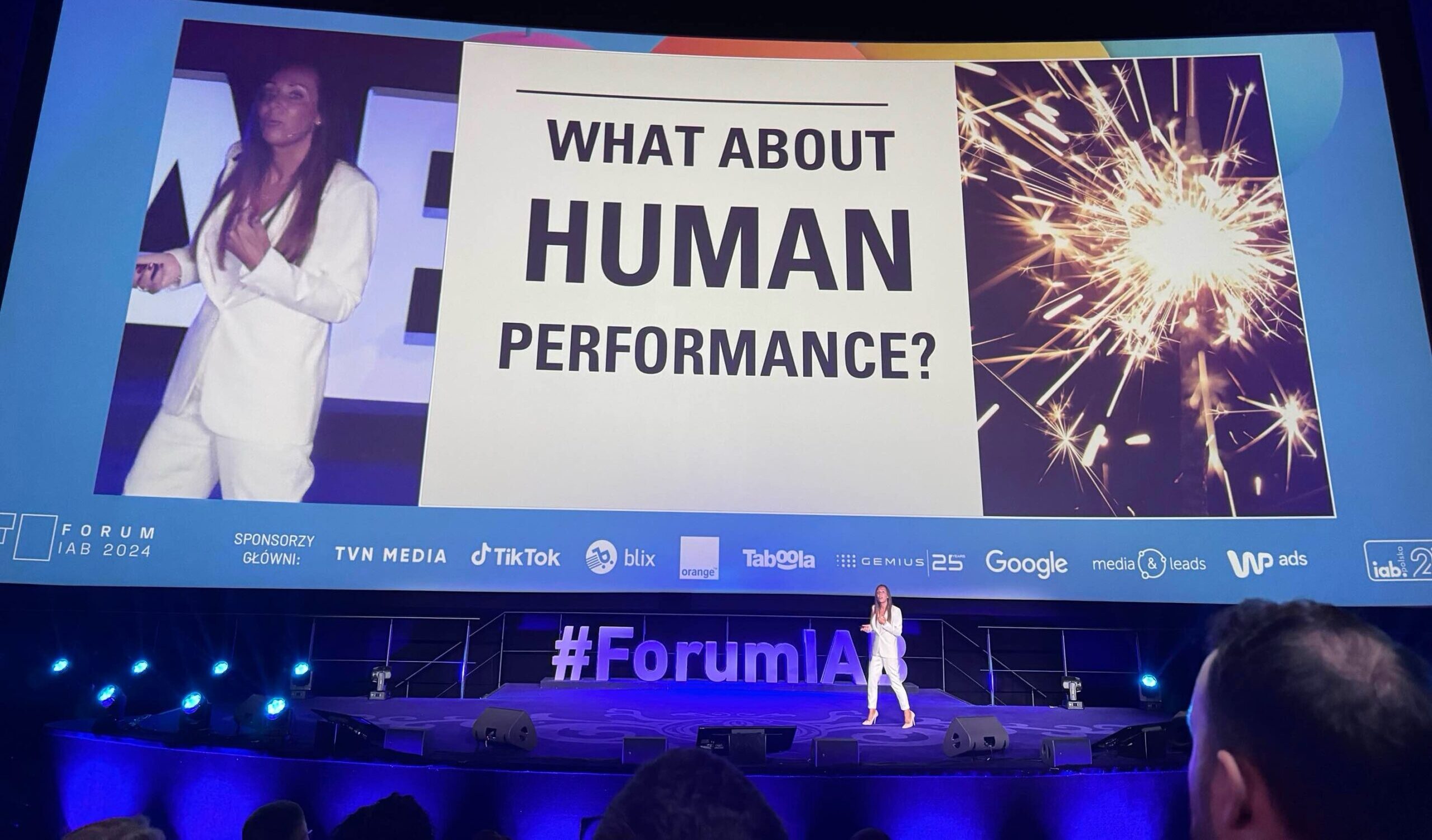
This week I’m in Amsterdam, working on a talk for a large global organisation navigating major restructuring (are there any companies left which aren’t?). The theme is resilience amid perpetual change and the ever-present hum of imposter syndrome circulating throughout their 90,000-strong workforce.
As I sit here writing by the canal, fingerless gloves, woolly hat and sunnies at the ready, I find myself returning, once again, to a theme I am emphasising with increasing urgency in my work. It is no longer enough to address challenges like this with mental solutions alone. “Thinking” our way out of today’s relentless disruption, and the spiky, persistent fear it invokes, simply doesn’t work anymore. If anything, it adds to the noise.
We have to go beneath the mental and into the energetic.
We have to work more holistically than we ever have before. We have to feel our way through this, rather than endlessly attempting to out-think it.
We are, at our core, creatures of comfort. We seek ease, safety and familiarity. When we find it, we relax. We settle. We return to a kind of internal homeostasis – balanced, regulated, and quietly empowered. We feel good. But right now, comfort is hard to come by. The world feels unstable, economically, socially, organisationally, and that instability has a way of seeping into us. Everywhere we look there is uncertainty, fragmentation, a sense of things not quite holding together as they once did. And when we are surrounded by disorder, we begin to feel disordered ourselves.
We stop feeling good. In fact, many people feel the opposite: overwhelmed, unsettled, quietly afraid, and often deeply, bone-tired. As this state persists, something subtle yet powerful begins to happen within us. We contract. Not consciously, but instinctively. The system tightens in an attempt to protect itself. We shrink, energetically, in response to what feels unpredictable and unsafe. It is from this contracted state that imposter syndrome begins to take hold with greater intensity.
 When someone tells me they feel like an imposter, I don’t hear a story about capability. I see a system that has moved into contraction. From within that contraction, a cascade of changes occurs. Perception narrows, time tilts forward into a stream of “what if” thinking, the body braces, and the mind begins to loop. Attention shifts outward as we scan for cues – Am I okay here? Do I belong? – and from that place, doubt gathers pace.
Yet nothing fundamental has been lost. Skills do not evaporate overnight. Experience does not disappear. Intelligence does not erode in the space of a single moment. What changes is access. Access to clarity, to perspective, to the fuller expression of self becomes restricted when the system is in contraction.
This is why cognitive reframing alone so often falls short. You can attempt to think differently, to rationalise your way out of doubt, but if the underlying state remains contracted, those thoughts struggle to land. Most people recognise this instinctively. The physicality of imposter syndrome – the tight chest, the shallow breath, the racing mind – is unmistakable.
What shifts it is regulation. Not just of the mind, but of the whole system.
At its simplest, that shift can be understood like this:-
- First, recognise the moment of contraction — not as failure, but as a natural response to perceived instability
- Then, bring your attention out of the mental loop and into the body — where the contraction is actually happening
- Use breath deliberately, allowing the exhale to lengthen and signal safety back into the system
- Soften the physical holding patterns — the jaw, the shoulders, the chest — rather than unconsciously reinforcing them
- Ground yourself physically, reconnecting with a sense of stability through your body rather than seeking it externally
- And finally, return your attention inward, asking not “What do they think of me?” but “What do I know? What do I bring?”
Individually, these are small interventions. Collectively, they shift the entire state of the system.
As that shift begins to occur, orientation changes. The need to scan externally loosens, and a quieter, more grounded authority begins to re-emerge. This is what I describe as Soft Power, not loud or performative, but steady, centred, and self-trusting.
From this place, confidence is no longer something you attempt to construct. It arises naturally as the system returns to coherence. Thinking sharpens, communication steadies, presence lands. Not because doubt has vanished entirely, but because it is no longer in control.
This is why the real work in addressing imposter syndrome is not self-improvement. It is self-regulation. Not fixing who you are, but returning, again and again, to what is already there beneath the noise.
So as I return to the talk I’m preparing, to a room full of capable individuals navigating uncertainty, change, and the quiet erosion of self-trust, this is the message I am most intent on landing:-
You are not an imposter.
You are a highly capable human being whose system has responded intelligently to a destabilising environment.
The work is not to fix yourself. It is to return to coherence, repeatedly, in the moments that matter most. Because when you do, you don’t just feel different. You think more clearly, contribute more fully, and lead more powerfully.
And in a world where change is the only constant, that shift is no longer optional. It is the difference between simply surviving change and truly leading through it.
If imposter syndrome is a familiar state for you, start here:
- Name it in the moment
“I’m in contraction.” Separate yourself from the state. - Interrupt the physiology
Lengthen your exhale, soften your body, feel your feet. Signal safety. - Re-anchor internally
Shift from “What do they think?” to “What do I know? What do I bring?” - Take one aligned action
Speak. Share. Contribute. Even briefly. Rebuild self-trust through action. - Practise daily, not just in crisis
Regulation is a skill. The more you return to coherence, the more natural it becomes.
Success, with grace.